


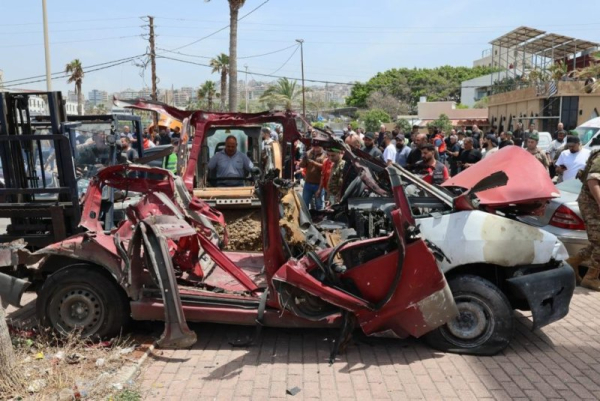
Lebanese rescuers and army soldiers inspect the wreckage of a vehicle that was hit in an Israeli strike in the southern coastal city of Sidon, Lebanon, on Wednesday. Photo by Wael Hamzeh/EPA
Israel expanded its attacks on Lebanon on Wednesday, carrying out a series of drone strikes on vehicles along the coastal highway south of Beirut and killing at least 12 people, including two children, the Lebanese Health Ministry said.
The escalation occurred a day before Lebanon and Israel were to begin a third round of U.S.-mediated talks in Washington on Thursday and Friday.
The Israeli drones targeted cars in three separate attacks on the coastal highway in the Jiyyeh, Saadiyat and Barja areas, some 12 miles south of Beirut, according to security sources.
The Health Ministry said eight people, including two children, were killed in the strikes, while four others died in similar attacks on their cars between the port city of Sidon and the border town of Naqoura farther south.
Wednesday’s attacks brought the casualty toll to 2,896 killed and 8,824 injured since March 2, when Hezbollah resumed fighting Israel in support of Iran, according to the health ministry.
The Israeli Army did not comment on the drone strikes, but confirmed it launched morning strikes against Hezbollah infrastructure in several areas of southern Lebanon following evacuation orders for at least seven towns and villages.
Hezbollah, said its fighters launched additional attacks against Israeli forces in southern Lebanon using rockets and explosive drones, some of which, the Israeli army said, were intercepted.
The group’s drone attacks have become a growing concern for the Israeli army, with Israeli media quoting military officials as saying the drones “are capable of striking targets dozens of kilometers away and are difficult to detect and intercept.”
The United Nations peacekeeping force in south Lebanon, or UNIFIL, said in a statement Wednesday that it was “increasingly concerned” about Hezbollah and Israeli Army’s activities, including an increased use of drones exploding in and around its bases.
The statement cited several incidents this week when “presumed Hezbollah drones” detonated around and inside the UNIFIL headquarters in the border village of Naqoura, damaging some buildings and putting peacekeepers at risk.
On Tuesday, Hezbollah leader Sheikh Naim Qassem said the group’s fighters “will not abandon the battlefield” and will turn it into “hell” for Israel.
Qassem called on Lebanese President Joseph Aoun to withdraw from direct negotiations with Israel, saying that they would amount to “pure gains” for Israel and “free concessions” by Lebanon.
Aoun has been urging U.S. and European officials to pressure Israel to halt its attacks on Lebanon and comply with the April 17 cease-fire before any negotiations occur.
Aoun announced in an unexpected policy shift in March that he was ready for direct negotiations with Israel to secure a full truce and end Israeli attacks on Lebanon.
Lebanon’s negotiating team at the two-day talks with Israel in Washington was set to focus on Aoun’s five-point demands, which include consolidating the ceasefire, securing Israel’s withdrawal from occupied Lebanese territories, obtaining the release of Lebanese prisoners captured during the war, enabling displaced people to return to their homes and villages, and initiating reconstruction.
Israel is demanding Hezbollah’s complete disarmament, security for its northern settlements and eventually a peace agreement with Lebanon.
