

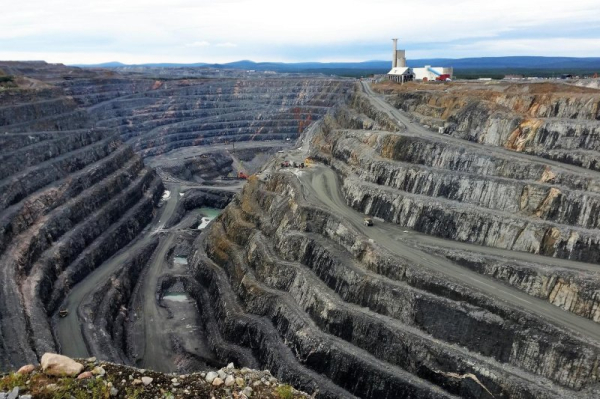
Although Argentina’s copper production is currently almost nonexistent, six large-scale mining projects are in different stages of development. Photo by Neta623/Pixabay
Although Argentina’s copper production is currently almost nonexistent, six large-scale mining projects in different stages of development are aiming to reverse that trend, driven by incentives under the Mining Investment Regime, or RIGI.
This regulatory framework, approved in September 2024, revived interest in developing new copper mining projects and unlocked others that had been stalled for years.
Among them is the return of Swiss multinational Glencore and the planned restart of its Alumbrera project, a copper and gold mine in Catamarca that closed in 2018 and is scheduled to resume operations in 2026.
In addition to regulatory incentives, international copper prices remain at historically high levels, driven by global demand tied to the energy transition and infrastructure investment. That environment is increasing multinational interest in speeding up the launch of large-scale projects in Argentina.
Víctor Delbuono, a mining economist and member of the Fundar think tank, told UPI that investors now have greater confidence in Argentina because the rules are clearer.
“Today, the guarantees investors require are in place related to profit distribution, stable investment rules and certain tax incentives that, in the case of copper, put Argentina in a somewhat more competitive position than Chile and Peru,” he said.
The Los Azules project in San Juan province is the only one approved so far under RIGI and is setting the pace.
“RIGI has been essential in reviving interest in copper mining because it provides incentives and fiscal stability that attract major investment,” Michael Meding, vice president of McEwen Copper and general manager of the project, told UPI.
Los Azules is one of the largest undeveloped copper deposits in the world.
It is situated in the Andes in San Juan province at more than 11,800 feet above sea level. Construction is expected to begin in 2027 after detailed engineering is completed that year. The initial investment is estimated at more than $3.17 billion, with production projected between 2029 and 2030.
“Because of its scale, design and sustainable approach, it is poised to become a world-class mining project,” Meding said.
The plan calls for producing 204,800 tons of copper cathodes annually during the first five years and an average of 148,200 tons over an estimated 21-year mine life, with potential for extension.
“The potential for Argentina to develop copper projects is undeniable, even though the country does not currently produce copper concentrate,” said Meding, who also chairs the Argentine Mining Explorers Group, which represents all exploration companies.
He noted that copper mining in Argentina has been limited to exporting unprocessed rock, as done by the small firm Martín Bronce.
The closure of Alumbrera — the last operating copper mine — left a gap that new projects such as Taca Taca in Salta, El Pachón in San Juan, Mara in Catamarca, Vicuña in San Juan and PSJ Cobre Mendocino in Mendoza are now seeking to fill.
“These projects, all world-class, are in different technical stages and environmental permitting processes. Each could produce around 200,000 tons of copper a year or more,” Meding said.
He noted that the Mara and El Pachón projects have committed investments of $4 billion and $9.5 billion, respectively, but both are still awaiting environmental approval.
Some projects are moving toward construction and production in the next decade, while others must complete technical studies and social impact assessments to ensure viability and local acceptance.
For example, the San Jorge project in Mendoza has environmental approval, but faces challenges gaining public support, unlike San Juan, which offers a more favorable environment for mining.
“Peru produces about 2.6 million tons of copper a year, and Argentina could reach more than 1 million in the next 10 years. Still, that is far below Chile, which produces nearly 6 million tons annually,” Meding said.
Delbuono confirmed that Argentina has had no active commercial production since Alumbrera closed.
“Argentina has great potential. In fact, it has one of the three largest portfolios of undeveloped projects in the world. The country could produce as much as 1.3 million tons of refined copper a year with six or seven of its largest projects,” he said.
The main challenge is infrastructure, he said, adding, “Much of the success of these projects depends on the availability of transportation, electricity and water, which also increases investment costs.”
Delbuono said many deposits are in the Andes and sometimes more than 125 miles from the nearest city. In addition, transporting material to the Atlantic Ocean requires traveling 750 to 930 miles on infrastructure that is not well-equipped for mining because Argentina’s network is designed primarily for grain shipments.
He said another key challenge for Argentina is achieving macroeconomic and political stability.
“As with any major project, the rules must be clear and geared toward the long term. These projects require investment decisions with a long-term outlook,” he said.
