

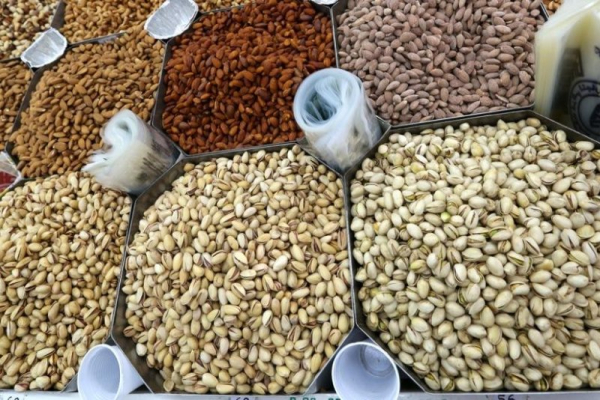
pistachios are experiencing strong popularity in multiple markets. Consumption as a snack continues to grow steadily, while their use in ice cream, chocolate and baked goods is becoming more common. File Photo by Ali Haider/EPA
Pistachio cultivation is expanding rapidly in Argentina, with planted areas increasing more than 500% over the past five years and led by the western province of San Juan.
San Juan accounts for nearly 90% of national production and is drawing growing agricultural investment as global demand rises in a market dominated by a handful of countries.
The United States and Iran account for more than 68% of global production, while Turkey ranks third. China, Syria, Greece and Spain also produce pistachios.
Argentina aims to position itself as an emerging supplier, although increasing output will take at least five years due to the time required for trees to reach full production.
Despite that lag, pistachios are experiencing strong popularity in multiple markets. Consumption as a snack continues to grow steadily, while their use in ice cream, chocolate and baked goods is becoming more common.
Social media has also fueled demand. A recent example is the so-called “Dubai chocolate,” filled with pistachio cream, which went viral and sparked renewed consumer interest.
Nutrition is another factor behind the surge. Pistachios contain protein, healthy fats and antioxidants. As a result, they have gained popularity among athletes, vegan consumers and people seeking healthier snack options.
In Argentina, the crop has found favorable conditions in the Cuyo region of western Argentina. The provinces of San Juan and Mendoza account for most production, thanks to their dry climate and cold winters.
Gonzalo Sánchez Cañete, a researcher at Argentina’s National Institute of Agricultural Technology in San Juan, told UPI that pistachio production is relatively new within the country’s agricultural sector.
The first plantations were established in San Juan in 1980 using seeds introduced from California. Commercial development began in the mid-1990s after regulations tied to a tax deferral law were implemented.
Since then, growth has accelerated, particularly over the past decade. About 21,250 acres are planted between southern San Juan and northern Mendoza, Sánchez Cañete said. He is also a member of Argentina’s Dried Fruit Network.
As cultivation expands, the local industry has also grown. Sánchez Cañete said Argentina has favorable conditions to compete in the global market.
Private sector interest is reflected in new projects. One initiative led by AgroFides in San Juan, known as La Memita Phase II, aims to expand production and attract investors.
According to Agrofy News, the plan includes developing 100 productive hectares with a target of 400,000 kilograms per year. The project has investors from seven Argentine provinces and four countries, including Argentine nationals living in the United States and Europe as well as South African investors.
Sánchez Cañete identified Frutos del Sol as the country’s largest producer. The company exports to 10 destinations, sells about 881,850 pounds in the domestic market and ships 3.5 million pounds abroad annually.
Looking ahead, the researcher said the crop could expand to other regions. Argentina already has processing infrastructure, nurseries that produce plants and large areas with suitable climate conditions.
Within Latin America, Argentina is the region’s leading pistachio producer. Chile has begun experimenting with the crop, but insufficient winter cold presents challenges.
Similar limitations exist elsewhere. In Mexico, small-scale plantings have emerged in the north, partly because pistachios are grown in neighboring U.S. states such as Arizona and New Mexico. However, Sánchez Cañete said those efforts remain in early stages.
Brazil has also shown interest, but faces comparable constraints. “This crop requires significant winter cold,” he said.
Beyond climate, pistachio trees require well-drained soils and substantial water supply to support growth.
