

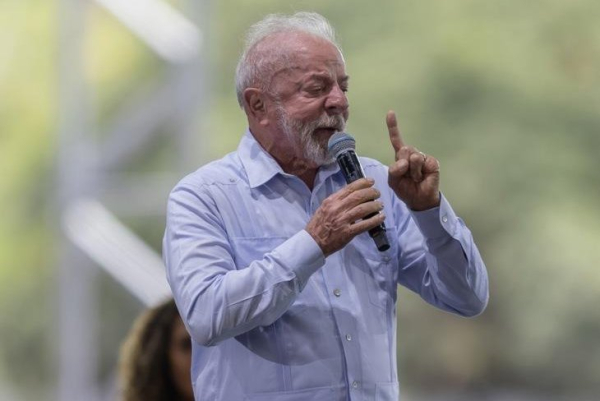
Brazilian President Luiz Inacio Lula da Silva said the county will not modify instant payment system Pix after criticism from the United States that questioned its impact on private financial companies. Photo by Isaac Fontana/EPA
Brazilian President Luiz Inácio Lula da Silva said his government will not modify instant payment system Pix after new criticism from the United States that questioned its impact on private financial companies.
“No one will force us to change Pix,” Lula said Thursday during a visit to infrastructure works in Salvador, in the state of Bahia, referring to recent concerns raised in Washington.
The president said the United States “published a report this week on Pix” arguing that the system “distorts international trade” and creates problems for companies linked to the payments sector.
'Ninguém vai fazer a gente mudar o PIX', diz Lula ao comentar relatório dos EUA com críticas à ferramenta https://t.co/CBMDZNRmgD #g1 pic.twitter.com/gtI50bokBo— g1 (@g1) April 2, 2026
Pix, developed by the Central Bank of Brazil and launched in November 2020 during the presidency of Jair Bolsonaro, allows instant bank transfers without intermediaries and generally at no cost to users.
The system is used by most of Brazil’s population and has reduced the use of cash and cards.
The criticism is part of a broader investigation launched by the United States in July 2025 under Section 301 of its trade legislation, which examines Brazilian practices considered potentially harmful to U.S. companies in areas such as electronic payments, digital trade and financial services.
During public hearings held in September, private sector representatives in the United States said the Pix model could create competitive imbalances by combining regulatory and operational functions within the Central Bank of Brazil.
They also questioned measures that promote its adoption within the financial system.
The Brazilian system has gained international relevance due to its rapid adoption and low cost. Unlike the United States, where electronic payments rely heavily on private networks such as Visa and Mastercard, Pix allows direct transfers between accounts through QR codes or banking applications.
Although the system was implemented during Bolsonaro’s government, the current president has defended it as a key tool to expand financial access.
The statements also reflect internal political tensions. Federal Deputy Lindbergh Farias criticized Sen. Flávio Bolsonaro for not speaking out about the U.S. criticism.
O "patriotismo" do Flávio Bolsonaro acaba onde começam as ordens do Trump.
A Casa Branca atacando o nosso Pix e a nossa soberania e o ele em silêncio absoluto.
Prefere bater palma para americano do que defender o que facilita a vida de milhões de brasileiros.
É a prova de…— Lindbergh Farias (@lindberghfarias) April 2, 2026
“The White House is attacking our Pix and our sovereignty and he is in absolute silence,” Farias wrote on social media. He added that the senator’s “patriotism” “ends where Trump’s orders begin” and accused him of prioritizing external interests over a tool that makes life easier for millions of Brazilians.
The case comes amid broader trade frictions between the two countries. In November, the United States adopted tariff measures against Brazilian products after determining that certain economic policies affected its commercial interests.
In addition to Pix, U.S. authorities have raised other concerns related to digital regulations and the trade environment within Mercosur.
