

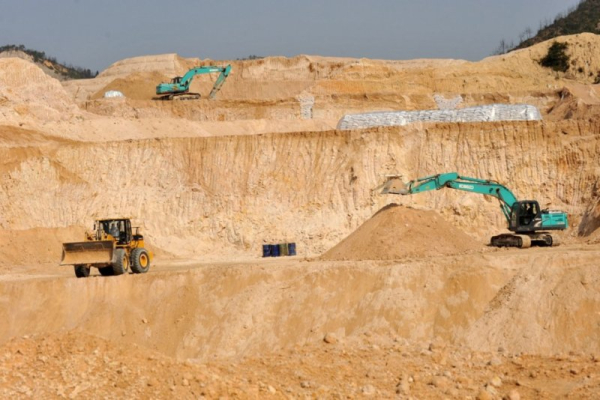
A file picture made available on 09 February 2012 shows a rare earth mine in Ganxian county in central China’s Jiangxi province on 30 December 2010. Chinese state-owned companies have told some Japanese firms they will not enter into new rare earth supply contracts, Beijing-based sources said on Jan. 10, 2026. File Photo by EPA
Chinese state-owned companies have told some Japanese firms they will not enter into new rare earth supply contracts, Beijing-based sources said Saturday, a move that could tighten pressure on Japan after recent tensions over Taiwan-related remarks by Japanese Prime Minister Sanae Takaichi.
Sources familiar with bilateral relations said the stance appears likely to remain in place for the time being. They added that China is also considering canceling some existing contracts.
The development follows China’s announcement Tuesday that it would bar exports of dual-use materials to Japanese military end users and for purposes that contribute to boosting Japan’s military capabilities, according to the sources. They said exports were halted shortly afterward, and that Saturday’s reports mark the first confirmed instance of Japanese buyers being refused rare earth transactions.
Japan’s foreign ministry has lodged a protest and urged China to withdraw the measures, the sources said.
China has framed the steps as a response to Takaichi’s remarks last November suggesting Japan could intervene in the event of a Taiwan contingency, the sources said.
A spokesperson for China’s Ministry of Commerce said Japanese leaders have made what the ministry called erroneous public comments about Taiwan that implied possible military intervention in the Taiwan Strait, calling it interference in China’s internal affairs and a violation of the One China principle.
The sources said China has expanded pressure on Japan since the remarks, including travel advisories and restrictions affecting Japanese cultural events and entertainment, while also keeping limits in place on some Japanese seafood imports.
— Reported by Asia Today; translated by UPI
© Asia Today. Unauthorized reproduction or redistribution prohibited.
