


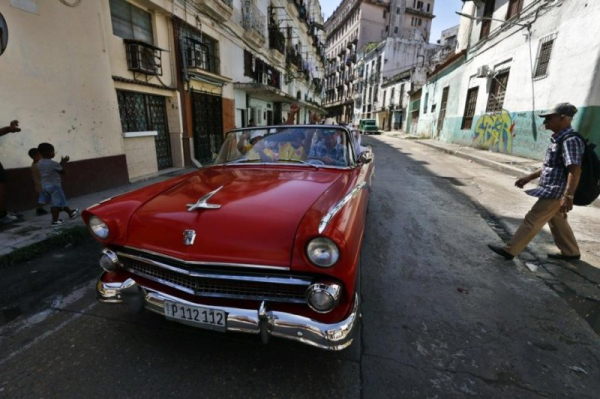
With more than 25% of its citizens aging and a steady loss of young workers, Cuba faces a critical scenario of structural depopulation that is pushing the country toward an economic and labor crisis. File Photo by Ernesto Mastrascusa/EPA
Cuba is heading toward an irreversible demographic contraction and could end the century with just 5.6 million residents, according to data from the United Nations Population Fund and Cuba’s National Office of Statistics and Information.
The information, presented this week in Havana, indicates the island could lose nearly half its population by 2100 because of an extreme demographic crisis.
With more than 25% of its citizens aging and a steady loss of young workers, Cuba faces a critical scenario of structural depopulation that is pushing the country toward an economic and labor crisis.
According to records from the National Office of Statistics and Information, known as ONEI, Cuba has already fallen from more than 11 million residents officially reported in 2020 to a current real population below 10 million.
Authorities said the demographic decline stems from an unprecedented exodus, rapid population aging and a sharp drop in births, the state-aligned magazine Bohemia reported.
Cuba’s migration deficit is massive and constant. Most emigrants are young adults and skilled professionals in their most productive and reproductive years.
Official figures show 251,221 people emigrated in 2024. However, Cuban demographer Juan Carlos Albizu-Campos said the real outflow exceeded 545,000, and he estimated the country’s effective population at about 8 million, far below the official estimate, Cibercuba reported.
Cuba has become the oldest country in Latin America. More than 25.7% of its residents are 60 or older. Short-term projections indicate that by 2030, one in three Cubans will be an older adult.
The annual number of births also continues to hit record lows. Cuba registered just 71,358 births in 2024, the lowest figure reported since the 1959 revolution.
The trend worsened the following year, when births fell to 68,051 children, a level of contraction not seen on the island since the late 19th century.
With a fertility rate stalled at 1.29 children per woman, Cuba remains far below the 2.1 threshold needed to ensure generational replacement.
Demographic experts say the population’s disinterest in or inability to plan families inside Cuba is not accidental, but the result of a multifactorial crisis.
The country’s severe economic crisis, marked by chronic food shortages, daily power outages lasting up to 18 hours, the sharp devaluation of the Cuban peso and soaring inflation, has made raising a child financially unviable for many young families.
That pressure has compounded a biological and social cycle. Most emigrants are young women of childbearing age. As they leave, the country’s inherent capacity to generate future births is severely weakened.
The medium- and long-term consequences of this inverted population pyramid threaten to paralyze state structures.
For onet, the productive system faces an imminent breakdown because of a lack of workers. Key industries, agricultural fields, hospitals and schools are being depleted without a professional replacement generation, limiting the country’s ability to produce wealth and basic food.
Also, the social security and pension system has become mathematically unsustainable. Fewer active workers are contributing to public finances to support a large and growing population of retirees whose pensions have been devalued by inflation.
And, the health situation is emerging as a silent humanitarian crisis. A surge in medical demand from an aging population is coinciding with an overwhelmed public health system lacking basic supplies, syringes and essential medicines.
Estimates also point to about 400,000 older adults living completely alone, with family support networks that disappeared as their children emigrated and who now depend on a financially strained state system.
Although Cuban authorities have implemented the Policy for Attention to Demographic Dynamics since 2014, economic incentives and fertility-boosting strategies have systematically failed against the severity of the country’s daily crisis, Diario de Cuba reported.
Analysts agree Cuba has crossed a demographic point of no return. Even under a hypothetical scenario in which the country’s economy improved immediately, the youth base needed to revive society has already left the island, leading the Caribbean nation to irreversible depopulation, isolation and structural stagnation, they say.
