

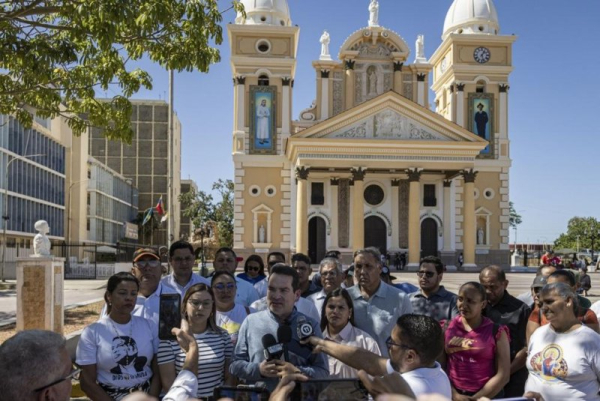
Congressman Tomás Guanipa (C) speaks during a press conference in Maracaibo, Venezuela, on Tuesday. Guanipa said Venezuelan prisons are holding people who have not committed crimes and were being detained for expressing dissent. Photo by Henry Chirinos/EPA
Venezuela’s government announced the release of 99 people detained after the country’s 2024 presidential election amid a prolonged political crisis fueled by allegations of fraud that secured President Nicolás Maduro a new term.
In a statement posted on Instagram on Thursday, the Ministry for the Penitentiary Service said those released had been detained for their alleged involvement in “acts of violence and incitement to hatred” following the 2024 vote, when protests erupted after the National Electoral Council declared Maduro the winner.
The announcement comes as tensions increase with the United States and in naval military deployments ordered by President Donald Trump grow near Venezuela’s coast.
“The national government and the justice system have decided to review cases individually and grant precautionary measures in accordance with the law, allowing for the release of 99 citizens, as a concrete expression of the state’s commitment to peace, dialogue and justice,” the ministry said.
It added that the Venezuelan state “guarantees all detainees treatment based on respect, legality and comprehensive care,” even amid what the government describes as “imperialist siege and multilateral aggression.”
According to the non-governmental organization Committee of Mothers in Defense of the Truth, releases were recorded starting early Thursday involving people detained during postelection protests.
“So far, we have confirmed the release of 65 men held at Tocorón, three women at Las Crisálidas and three adolescents in La Guaira,” the group said on social media.
The NGO Justicia, Encuentro y Perdón on Thursday called for the release of all political prisoners in Venezuela, which it estimates at 1,085, following the release of dozens detained during the 2024 postelection crisis.
According to a report by Human Rights Watch, Venezuelan authorities intensified repression against human rights defenders and opposition members in the period leading up to the July 28 presidential election through arrests, disqualifications and tighter restrictions on civic space.
After the election, international observers raised serious doubts about the National Electoral Council’s announcement that Maduro had been re-elected. The report said that when thousands of demonstrators took to the streets, authorities responded with harsh repression, including killings, arrests and other coercive tactics.
The Maduro administration, however, maintains that the country is “free of political prisoners,” and says those labeled as such are jailed for committing “serious criminal acts.”
The releases resumed Thursday after being suspended since March, according to relatives of detainees.
