


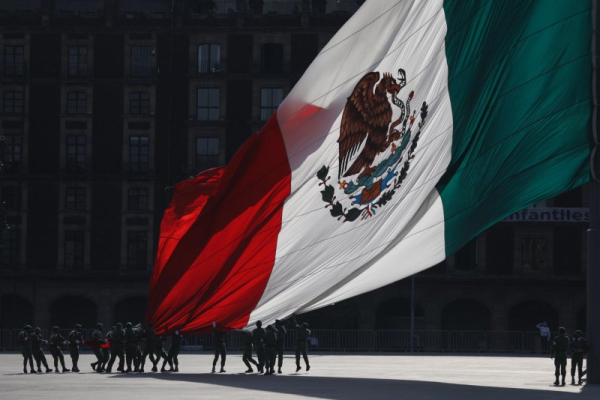
Mexico approved a constitutional reform that adds foreign intervention or interference in electoral processes as a new ground for annulling elections. File Photo by Sashenka Gutierrez/EPA
Mexico’s Congress approved a constitutional reform that adds foreign intervention or interference in electoral processes as a new ground for annulling elections.
The measure, promoted by the ruling party, the National Regeneration Movement, or Morena, has sparked debate over national sovereignty, electoral security and the limits of legal interpretation in future elections.
The reform amends Article 41 of the Constitution to establish that an election may be annulled when acts of foreign intervention or interference that influence electoral results are proven.
The initiative was initially approved by the Chamber of Deputies and later received Senate approval. It must now be ratified by at least 17 state legislatures before it can take effect.
The proposal was introduced by Ricardo Monreal, Morena’s coordinator in the Chamber of Deputies, who argued that Mexican law had until now lacked a specific sanction for cases of foreign interference in elections.
“Currently there is no sanction for anyone who seeks to invade our country or interfere in electoral processes,” Monreal said during the legislative debate, according to El Universal.
The lawmaker said the annulment could only be applied when there is “full and conclusive evidence” that foreign governments or external agents intervened in an election.
The Chamber of Deputies approved the reform with 307 votes in favor, 128 against and one abstention.
The ruling coalition argues that the measure seeks to strengthen national sovereignty against possible attempts at external influence, including irregular financing, disinformation campaigns, digital operations or political pressure originating abroad.
President Claudia Sheinbaum publicly backed the initiative and said there is a “real risk” of foreign intervention in future Mexican electoral processes.
Several local media outlets reported that the government has linked the reform to an international environment marked by growing geopolitical disputes, digital influence campaigns and external pressure on Latin American governments.
However, opposition parties questioned both the substance of the reform and the speed with which it advanced through Congress.
Rubén Moreira, parliamentary leader of the Institutional Revolutionary Party, warned that the initiative was introduced only days before it was debated and argued that there was not enough time to thoroughly analyze the legal implications of concepts such as “interference” or “foreign intervention,” according to reports by El País.
Lawmakers from the National Action Party and the Citizens’ Movement party also warned of the risk that the new provision could be used discretionarily to challenge election results under broad interpretations of what constitutes foreign influence.
During the legislative debate, Morena rejected those accusations and said the reform is not intended to censor news media, social media platforms or individual expressions.
Monreal said that a news article, an interview or a social media post would not, by themselves, be sufficient grounds to justify the annulment of an election.
He also said secondary legislation will be needed to precisely define the legal circumstances under which foreign intervention occurred and which authorities will be empowered to determine it.
The debate comes amid growing political tensions between Mexico and United States over issues related to drug trafficking, border security and regional cooperation.
It also coincides with a broader debate across Latin America over the influence of foreign governments, transnational digital campaigns and mechanisms to protect electoral sovereignty.
