


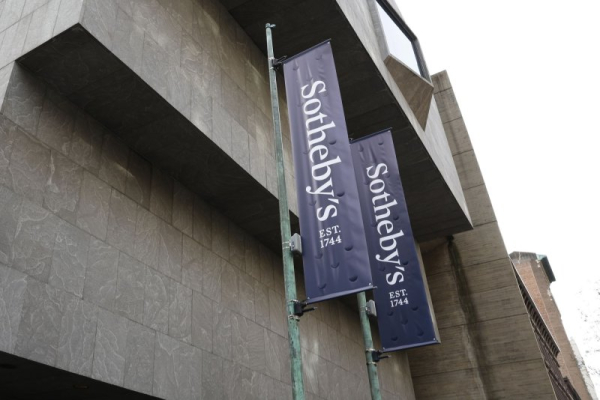
Mexico is calling for the return of artifacts included in a Sotheby’s auction. File Photo by John Angelillo/UPI | License Photo
The Mexican government has demanded the withdrawal of two archaeological artifacts of Mexican origin that are scheduled to be auctioned on June 18 by Sotheby’s in New York, arguing that they form part of the nation’s cultural heritage and should be returned to the state.
The request was announced by Culture Secretary Claudia Curiel de Icaza, who said Mexican authorities have already initiated actions to demand the removal of the items from the sale and to secure their restitution.
According to the official, an analysis conducted by the National Institute of Anthropology and History determined that both objects are part of Mexico’s cultural heritage.
Ver esta publicación en Instagram
Una publicación compartida de Claudia Curiel de Icaza (@claudiacurieldeicaza)
The claim adds to a series of actions undertaken by authorities during June to halt the commercialization of archaeological heritage in the United States.
According to publications from the Culture Secretary, the government has requested the suspension of sales or the restitution of at least 199 archaeological artifacts identified in three auctions held or scheduled this month in the United States.
The claims include one archaeological artifact offered by auction house COAuction, based in Illinois; 118 archaeological objects included in the “Pre-Columbian, Spanish Colonial Art” auction organized by Artemis Fine Arts in Louisville, Colorado; and another 80 artifacts identified in the “Fine / Visual Art, Ancient, Ethnographic Art” sale, also organized by the same firm.
“We reaffirm our commitment to the recovery and protection of cultural assets that belong to our country. No commercial interest can be placed above the obligation to preserve the heritage that reflects our history and cultural diversity,” Curiel de Icaza said in a message posted on social media.
So far, Sotheby’s has not publicly commented on the Mexican government’s request or on efforts undertaken to remove the artifacts from the auction scheduled for June 18.
According to Sotheby’s catalog, one of the objects identified by Mexican authorities is a Teotihuacan mask dating from A.D. 450 to 650 during the Classic period.
The artifact is part of a private New York collection and carries an estimated value of between $30,000 and $50,000. At the time of inquiry, it had received a bid of $22,000.
The auction, scheduled for June 18 at Sotheby’s headquarters in New York, also includes other objects attributed to Mexico’s pre-Hispanic cultures.
Among them is an Early Classic Maya effigy vessel dating from A.D. 250-450, with an estimated value of between $7,000 and $9,000; a female figure from Michoacán dating from the Early Preclassic period, 1200-300 B.C., valued at between $15,000 and $25,000; and a Mezcala figure from the Late Preclassic period, 300-100 B.C., with an estimated value ranging from $40,000 to $60,000.
However, Mexican authorities have only reported actions seeking the withdrawal of two objects identified by the National Institute of Anthropology and History as part of the nation’s cultural heritage.
The case adds to Mexico’s ongoing efforts over several years to recover archaeological objects and cultural property that it considers to have been removed from or commercialized outside the country irregularly.
The claim is part of the “My Heritage Is Not for Sale” campaign, an initiative led by the Ministry of Culture and the National Institute of Anthropology and History, with the support of the Ministry of Foreign Affairs, the Attorney General’s Office and the National Guard to locate and recover Mexican cultural assets abroad.
Between 2019 and 2024, Mexico secured the repatriation of more than 14,000 cultural assets from various countries, according to official figures, making the program one of the most active heritage recovery strategies in Latin America.
