


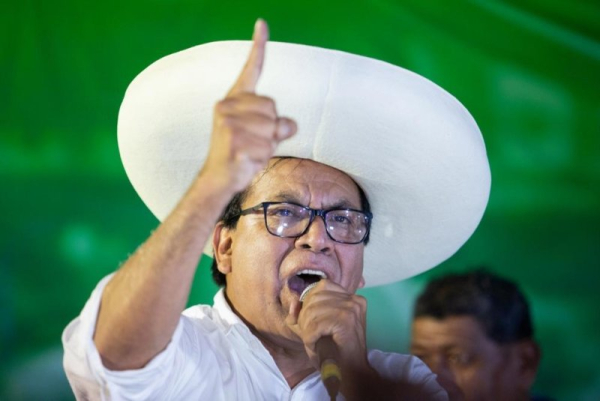
Peruvian presidential candidate Roberto Sanchez of the left-wing party Juntos por el Peru speaks during a political rally in Huaycan on Saturday. He has been accused of making false statements in administrative proceedings and falsifying information related to campaign contributions, income and expenses between 2018 and 2020, Photo by Renato Pajuelo/EPA
Peru’s Public Ministry requested a prison sentence of five years, four months for leftist presidential candidate Roberto Sánchez, in a move that also seeks to permanently bar the leader of the Juntos por el Perú party from serving as president of the organization.
Prosecutors accuse Sánchez, who has been charged, of making false statements in administrative proceedings and falsifying information related to campaign contributions, income and expenses between 2018 and 2020, according to Peruvian media reports.
A fiscal audit found that the party formally reported zero income during the 2018, 2019 and 2020 financial periods and election campaigns. However, investigators said the party collected nearly 280,000 soles, about $81,500, from membership dues and candidate contributions.
Prosecutors allege the funds were diverted to personal bank accounts managed by Sánchez, his brother, William, and close associates, according to the newspaper El Comercio.
The prosecution request comes at a critical moment in the presidential campaign. With 99.9% of ballots counted, Sánchez appeared to have secured a place in the runoff election with 12% of the vote, narrowly surpassing Rafael López Aliaga in the first round.
Sánchez is expected to face Keiko Fujimori in the June 7 runoff.
Carlos García Asenjo, Roberto Sánchez’s attorney, rejected the accusations and said prosecutors were confusing administrative responsibilities within a political organization.
He argued that the validation and signing of institutional financial statements fall exclusively to the party treasurer, not its president, according to RPP Noticias.
The defense also said the disputed funds were managed independently by the National Electoral Committee and used exclusively to cover logistical campaign expenses in Peru’s regions.
Despite the severity of the criminal request, Sánchez will be allowed to continue campaigning. Under Peru’s Constitution and electoral laws, a candidacy can only be annulled through a final conviction upheld on appeal.
Because the case remains in an intermediate judicial stage, he retains his political rights. If he wins the election, Peru’s Constitution would grant him presidential immunity, automatically suspending any criminal proceedings against him until the end of his five-year term.
Opposition groups have called for Sánchez to withdraw from the race, arguing he lacks the moral qualifications to run for office. Leftist groups, meanwhile, denounced the prosecution as a politically motivated judicial strategy designed to interfere in the general election.
The first major legal hearing in the case is scheduled May 27, when Peru’s judiciary will decide whether to dismiss the charges or move forward with a public criminal trial against the presidential candidate.
