

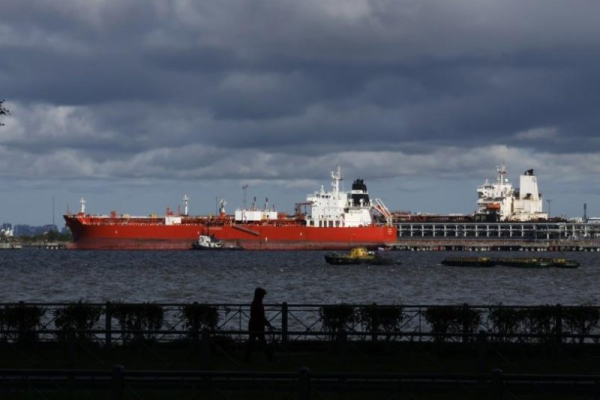
The U.S. Treasury Department said this week that Cuba is prohibited from receiving Russian crude oil File Photo by Anatoly Maltsev/EPA
Two tankers carrying Russian oil and fuel are expected to arrive in Cuba in the coming days, testing new U.S. restrictions and raising uncertainty over whether the shipments will be allowed to unload, according to maritime tracking data and official statements.
The U.S. Treasury Department said this week that Cuba is prohibited from receiving Russian crude oil, adding the island to a sanctions framework that blocks transactions involving the sale, delivery or offloading of petroleum products originating from Russia. The measure was issued by the Office of Foreign Assets Control.
It remains unclear how the restrictions will be enforced once the vessels approach Cuban waters. The shipments could test how far the Trump administration is willing to go to prevent new fuel deliveries to the island, as Washington increases pressure on Cuba’s energy supply.
One of the vessels, the Russian-flagged Anatoly Kolodkin, departed March 8 from the port of Primorsk carrying approximately 730,000 barrels of crude. It could arrive in Cuba around Monday, according to analytics firm Kpler.
The tanker is under sanctions by the United States and the European Union due to its involvement in transporting Russian oil related to the war in Ukraine.
A second vessel, the Hong Kong-flagged Seahorse, is believed to be transporting about 190,000 barrels of diesel or gasoil and could reach Cuba in the coming days, according to maritime tracking data and analysis by Windward.
What is happening with the SEA HORSE (IMO 9262584) ???
Since Feb 25, the tanker has been drifting in the mid-Atlantic, AIS showing erratic loops after departing Malta and listing Gibraltar "for orders".
She was reportedly bound for Cuba with Russian oil, linked… pic.twitter.com/lTlfxkK7ih— Russian Forces Spotter (@TiaFarris10) March 11, 2026
The firm said the vessel has engaged in deceptive shipping practices, including disabling its positioning systems, a tactic associated with sanctions evasion, and lacks Western insurance.
Both shipments come as Cuba faces a deepening energy crisis marked by widespread blackouts and fuel shortages. The island has not received regular oil supplies since early January, after shipments from Venezuela were interrupted once Nicolás Maduro was arrested by the United States.
The situation has worsened, as Mexico also halted deliveries, increasing pressure on the Cuban economy and bringing the country close to collapse, according to reports.
The arrival of Russian fuel would provide a potential lifeline for the island, but also represents a direct challenge to U.S. policy. Washington has warned it could impose tariffs on countries supplying oil to Cuba and has moved to tighten restrictions on the island’s access to energy.
President Donald Trump said this week he expects to have “the honor of taking Cuba” and suggested he could do “whatever he wants” in the context of ongoing discussions about the country’s future, remarks that mark an escalation in rhetoric.
Russia has reiterated its support for Cuba and its willingness to provide assistance. Kremlin spokesman Dmitry Peskov said Moscow is committed to helping authorities in Havana and is ready to offer “all possible assistance,” including in the energy sector.
Cuban President Miguel Díaz-Canel rejected the U.S. position and warned that any pressure would be met with resistance, while Foreign Minister Bruno Rodríguez accused Washington of attempting to undermine the country’s constitutional order.
“The collective punishment applied to us, Cubans, will not dent the full exercise of our sovereignty,” Rodríguez said in a message posted on X.
