

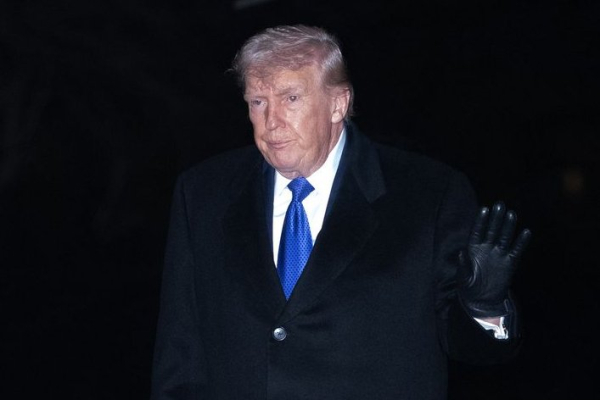
Speaking on the South Lawn of the White House on Monday night, President Donald Trump said he would be involved in nuclear talks with Iran that get underway Tuesday but reiterated warnings to Tehran that it may face further U.S. military strikes if it doesn’t make a deal. Photo by Aaron Schwartz/UPI | License Photo
U.S. President Donald Trump said he would participate “indirectly” in U.S.-Iran nuclear talks due to resume in Geneva on Tuesday.
Speaking aboard Air Force One on Monday night, Trump said the negotiations were very important and he believed Tehran wanted to reach a deal, saying the fallout of not doing so would be very bad news, referencing U.S. air and missile strikes on the country’s nuclear facilities in June, following failed negotiations.
“I don’t think they want the consequences of not making a deal. We could have had a deal instead of sending the B-2s [stealth bomber aircraft] in to knock out their nuclear potential. And we had to send the B-2s. I hope they’re going to be more reasonable,” said Trump, who acknowledged that they were tough to negotiate with.
Similar optimism for its own prospects emanated from the Iranian side on Monday with the foreign ministry in Tehran saying it believed the United States’ position had shifted to “a more realistic one,” regarding Iran’s nuclear program.
Following a meeting in Geneva on Monday with International Atomic Energy Agency director general Rafael Grossi on “technical matters,” Iranian Foreign Minister Abbas Araghchi said he was heading into the talks with “real ideas” to achieve a fair and just agreement, vowing Iran would not be coerced.
“What is not on the table: submission before threats,” he wrote in a post on X.
On Friday, Trump announced he was dispatching a second carrier strike group, the USS Gerald Ford, to the region to join an already substantial U.S. naval armada in the Arabian to ratchet up pressure on Tehran over its nuclear and ballistic missile programs and a deadly crackdown on protesters that began in late December.
Trump said he was deploying the world’s largest carrier to join the USS Abraham Lincoln strike group sent last month because if Iran didn’t “make a deal, we’ll need it.”
The Gerald Ford and its battleships and associated vessels, currently deployed in the Caribbean, are expected to arrive in the Arabian Sea in three to four weeks.
Tuesday’s negotiations pick up from talks in Oman on Feb. 6 where a U.S. team led by Trump’s special envoy Steve Witkoff and Jared Kushner, Trump’s son-in-law, met with the Iranian’s led by Araghchi, although proceedings were mediated by Omani officials and the two sides did not talk face-to-face.
As well as agreement on curtailing Iran’s enrichment of uranium, the Trump administration wants the talks to include its ballistic missile arsenal, a recent brutal crackdown on public protests and backing of regional proxies Hamas and Hezbollah.
Tehran has been pushing back, insisting it is only willing to discuss reining in its nuclear program — in exchange for sanctions relief.
This week in Washington
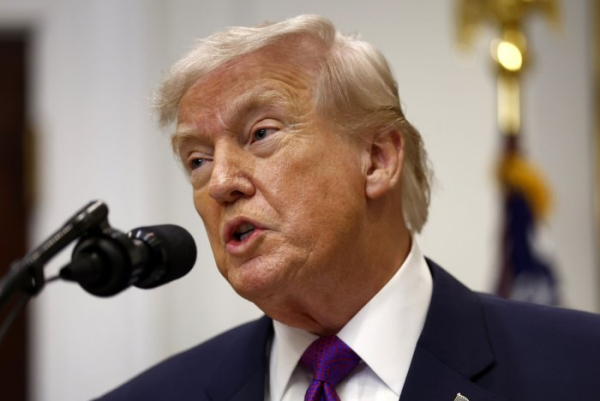
President Donald Trump speaks alongside Administrator of the Environmental Protection Agency Lee Zeldin in the Roosevelt Room of the White House on Thursday. The Trump administration has announced the finalization of rules that revoke the EPA’s ability to regulate climate pollution by ending the endangerment finding that determined six greenhouse gases could be categorized as dangerous to human health. Photo by Will Oliver/UPI | License Photo
