



The cost of a healthy diet is up significantly since 2021 but the number of people unable to afford it declined to 2.69 billion, a drop of 280 million, the United Nations said in its global hunger report for 2025 published on Tuesday. Photo by Allison Dinner/EPA
The daily cost of a healthy diet in 2025 jumped by almost a quarter to 4.28 equivalent dollars, up from 3.44 in 2021 and 2.94 dollars in 2017, according to an annual report on global hunger, food insecurity and malnutrition out Tuesday.
Latin America and the Caribbean faced the highest costs globally at 4.91 purchasing power parity dollars, but the number of people unable to afford a healthy diet fell to 2.69 billion, a little less than a third of the global population, compared with 2.97 billion, or 37.4% of the population, in 2021, the United Nations said in its The State of Food Security and Nutrition in the World report.
The report calculates the average minimum outlay to purchase locally available food meeting the energy and nutrition required for a healthy diet, which the U.N.’s Food and Agriculture Organization and World Health Organization define as one that is “adequate, balanced, diverse and moderate.”
The figure is the currency of a country that would be needed to pay for that healthy diet equated to what $4.28 buys in the United States, an adjustment for the fact that any given currency buys more, or less, goods than a straight-up dollar conversion would suggest.
Food and Agriculture Organization chief economist Maximo Torero noted that with extreme poverty defined as 3 PPP dollars per person per day, the 4.28 figure was “significantly higher” and said the proportion of people unable to afford to eat properly remained “extremely high.”
The U.N. cautioned that the drop in the proportion of the population for whom a healthy diet was unaffordable obscured big discrepancies among different continents, particularly Africa where two-thirds of the population lacked the money to meet their dietary needs, more than double the proportion in Latin America and the Caribbean and Asia.
At the same time, global hunger fell for a third straight year to 7.8% of the population, compared with the 2022 figure of 8.6%, almost 30 million fewer people.
The U.N. said the findings highlighted that cost continued to be a major obstacle to achieving the 2030 goal of ending hunger, boosting nutrition and sustainable agriculture but cautioned that reducing costs would not on its own be enough to improve the quality of diets and nutrition.
“While we welcome the clear progress we have made in reducing hunger, a healthy diet still remains unaffordable for one in three people globally. Obesity is rising and progress on maternal and child nutrition is stalling. But we know what works: policies that make healthy food the easy choice, promoting breastfeeding, front-of-pack labelling, taxing unhealthy products, and protecting children from harmful marketing,” said WHO Director-General Tedros Adhanom Ghebreyesus.
“Healthy diets are not a luxury — they are the foundation of health and must be within everyone’s reach,” he added.
The International Fund for Agricultural Development called on all stakeholders to pull together to translate the findings of the report into investment to produce healthy food people could afford.
“SOFI tells us that the cost of a healthy diet continues to rise and that nearly 2.7 billion people may still be unable to afford a healthy diet. Resilient value chains must be a central part of the answer. Our task now is to turn the evidence SOFI provides into investment — and to do so through partnership. Together, we can build the value chains, market systems and rural economies that make healthy food affordable for all,” said IFAD President Alvaro Lario.
Noting that the report’s figures were for 2025, Torero warned the situation was likely to have since worsened due to what he said were significant cuts in development assistance to Africa, which he said had overtaken Asia as the continent with the largest number of people suffering from hunger.
Terero also warned that rising costs from the disruption to commercial shipping bringing vital commodities out through the Strait of Hormuz due to the U.S.-Iran war would likely impact the picture reflected in the 2026 report when it was published next year.
Historic July moments through the years
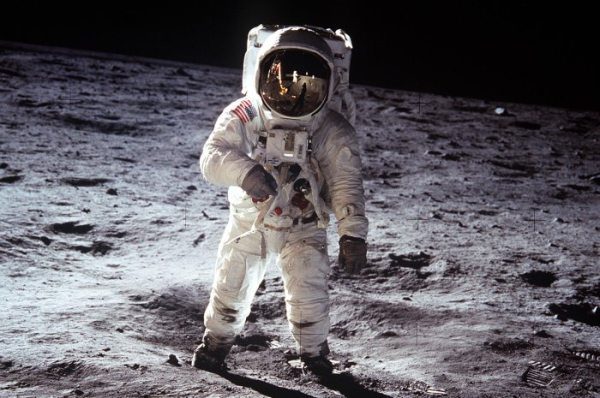
Astronaut Buzz Aldrin walks on the surface of the Moon during the Apollo 11 mission on July 20, 1969. Photo by NASA/UPI | License Photo
