


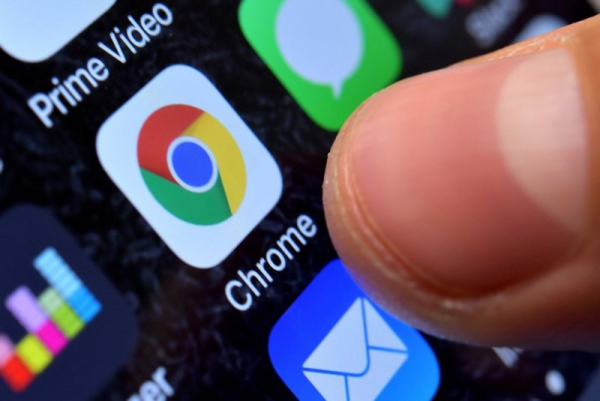
The British government said Monday that it will pass legislation to bar smartphones from schools in England amid broader political and societal debate over whether to ban social media for children younger than 16. File photo by Sascha Steinbach/EPA
The British government announced it will pass legislation to ban children from using smartphones in schools in England.
The plans unveiled Monday in the House of Lords by Baroness Jacqui Smith, the education minister, formalize what is already policy in many schools but introduces a “clear legal requirement” that would empower them to enforce it — including removing phones from children before class.
The proposed amendment to the Labour administration’s Children’s Wellbeing and Schools Bill came after repeated efforts by members of the upper chamber over the past few months to tack on a social media ban for children younger than 16.
Further “ping pong” opposition and blocking, with the Lords repeatedly refusing to pass the legislation and sending it back to the House of Commons, could risk the flagship bill running out of time to become law in the current session of parliament, which is due to end within weeks.
“We recognize the strength of feeling on this issue, both in this House and beyond,” said Baroness Smith.
“Notwithstanding the fact that we think the guidance already in place provides head teachers and schools with a range of approaches to be able to deliver the objective that we all share, we are committing to tabling an amendment in lieu, which will place the existing guidance on a statutory footing in the Bill, creating a clear legal requirement for schools.
“We’ve listened to concerns about how we support headteachers in delivering on this policy and we have listened to parliament,” added Baroness Smith.
The law will only apply to schools in England because education is an area where power is devolved to the parliaments and assemblies of the other countries of the United Kingdom — Scotland, Wales and Northern Ireland.
The move came two months after the Department for Education issued new guidance to schools that they should be phone-free environments, including during lessons, between lessons, breaktimes and at lunch, but stops short of an outright ban, stating only that phones must be off and in a bag or jacket.
Baroness Smith rejected criticism from some Lords that while the government’s proposal removes the “not seen, not heard” policy from guidance to schools — because phones remain a distraction even when off and out of sight — there was confusion with schools assuming the existing policy remains unchanged and “will continue to be the norm in schools.”
“We have now taken that out of the guidance, and we would be willing to consider whether we should be stronger on that. It is a complex area where different schools and different head teachers might have different ways of achieving the outcome, but it is not possible for me to say that it would be impossible [for children to still use their phones],” said Baroness Smith.
Kemi Badenoch, the leader of the opposition Conservative Party opposition, said Tuesday that her party had been battling Prime Minister Keir Starmer for a ban for over a year and that it had only been realized due to the efforts of her education secretary, Laura Trott.
“In March last year, I asked Starmer to ban phones in schools. He dismissed it as ‘completely unnecessary.’ Now it’s the latest Government U-turn. This is a testament to the relentless work of Laura Trott and our shadow cabinet,” Badenoch wrote on X.
“Now, let’s get under-16s off social media,” she added.
In a post online, Laura Trott, credited the efforts of teachers, parents and health professionals for what she said was “the right step for improving behaviour and raising attainment in our classrooms,” but vowed to hold the government to its word on making sure phones were actually banned.
“We’ll push the government to make clear that ‘not seen & not heard’ policies aren’t allowed,” wrote Trott.
Historic April moments through the years
Children race to push colored eggs across the grass during the annual Easter Egg Roll event on the South Lawn of the White House in Washington on April 21, 2025. Easter this year takes place on April 5. Photo by Samuel Corum/UPI | License Photo
