


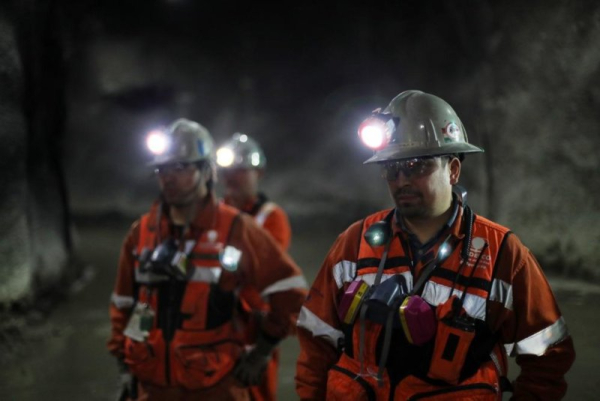
Argentina is experiencing a new wave of mining investment, particularly in copper, while Chile seeks to capture more of the economic activity linked to those projects. File Photo by Mario Ruiz/EPA
Chile and Argentina have revived a nearly three-decade-old treaty to develop mining projects along their shared border, with planned investments that exceed $20.7 billion.
The proximity of Argentine mining deposits to Chile’s northern mining regions could support the expansion of ports, highways, railways and international trade corridors. The agreement also could create new opportunities for companies that provide goods and services to the mining industry.
Officials from the mining and foreign affairs ministries of both countries met this week in Buenos Aires to relaunch the bilateral agreement, which was originally signed in 1997.
The move comes as Argentina experiences a new wave of mining investment, particularly in copper, while Chile seeks to capture more of the economic activity linked to those projects.
Chile’s Deputy Mining Minister Álvaro González said closer integration would reduce costs and increase production for international markets.
“The success of the treaty will not be measured by the number of projects crossing the Andes, but by Chile’s ability to transform a project pipeline worth more than $20.7 billion into more investment, more jobs, more innovation and more opportunities for the regions,” González said.
Manuel Reyes, a mining engineering professor at Andrés Bello University, told UPI the agreement would generate significant benefits for both countries.
“There is a symmetrical benefit. Argentina gains access to Pacific ports, reducing transportation costs by between 50% and 60% compared with the Atlantic route. That makes its mining deposits commercially viable,” Reyes said.
He added that Chile could strengthen its northern regions as Latin America’s leading mining services and infrastructure hub, attracting large-scale foreign direct investment.
“Much of Argentina’s copper is located just across the Andes from Chile’s Atacama and Coquimbo regions. Helping unlock those megaprojects allows Chile to capture operational and logistical value without depleting its own mineral reserves,” he said.
Reyes said the partnership also could strengthen both countries’ position with international buyers, particularly China, the world’s largest copper consumer.
“By jointly concentrating the world’s largest reserves of copper and lithium, both countries would gain unprecedented negotiating power over prices and supply standards with buyers such as China, while positioning themselves as the most attractive partners for Western countries in the global energy transition,” he said.
Despite the renewed cooperation, challenges remain, including differences in regulatory frameworks between the two countries and uncertainty over Argentina’s long history of economic volatility.
