

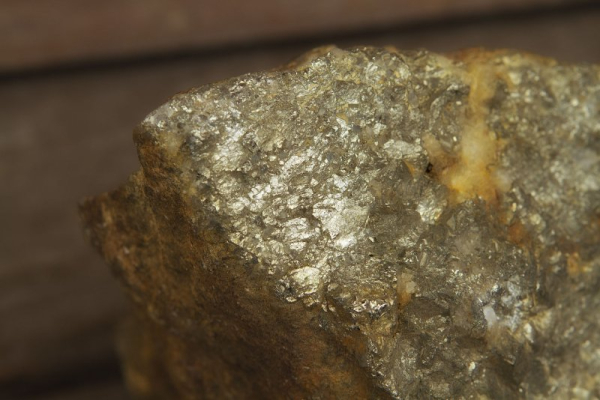
Chile expects to increase its gold production by 25% following the inauguration of the Salares Norte project, operated by South Africa-based Gold Fields. File Photo by Gary C. Caskey/UPI | License Photo
Chile expects to increase its gold production by 25% following the inauguration of the Salares Norte project, operated by South Africa-based Gold Fields in the Atacama region, in one of the most significant milestones for the country’s gold sector in the past decade.
Located in the municipality of Diego de Almagro at more than 4,000 meters above sea level, the private gold and silver project involves a $1.19 billion investment, will generate more than 4,000 jobs and is expected to contribute about $800 million to the Chilean treasury over its operating life.
Salares Norte is projected to produce between 325,000 and 375,000 ounces in its first year.
The open-pit mine incorporates pioneering technology. It has a remote satellite monitoring center that allows operations to be supervised from Santiago, the Chilean capital. It also includes one of the highest-altitude solar power plants in the world, which is expected to reduce more than 100,000 tons of CO2 over the life of the project.
“Salares Norte not only brings investment and jobs, but also confirms Chile as a reliable partner for long-term investment and strengthens Atacama’s productive base. More than 200 regional supplier companies are involved in this operation, integrating the local community into mining development and creating a virtuous value chain,” Chilean Mining Minister Aurora Williams said during the inauguration.
Yunus Suleman, chair of the Gold Fields board, noted at the event that the company’s plan is long term.
“Chile holds 6% of the world’s gold reserves but represents only 1% of global production. These figures show there is still much to be done in this region, which is why we are currently investing in exploration this year and next,” Suleman said.
The official start of operations is an important milestone for Chile, senior analyst Cristián Cifuentes of the Center for Copper and Mining Studies (CESCO) told UPI.
“Salares Norte is the most important greenfield gold project of the past decade, allowing Chile to recover its weakened gold production, which currently averages about 35 metric tons per year, compared with nearly 50 metric tons at its peak in 2013,” Cifuentes said.
Chile currently ranks 25th in global gold production, which is led by China, and is surpassed by major Latin American producers such as Mexico with 140 metric tons per year, Peru with 113 and Brazil with about 80.
“The addition of Salares Norte to national production would allow Chile to reach about 51 metric tons annually by 2026, placing the country in the global top 20, one spot below Bolivia,” Cifuentes said.
He added that new projects underway, including Fenix Gold, Lobo Marte, Volcán and Nueva Esperanza, “could allow Chile to exceed even 60 metric tons of gold production in the next decade.”
In 2025, a broader trend of increased global investment in gold mining is expected, and the Salares Norte project in Chile is a significant example of that trend, not an exception, EY mining lead partner Alicia Domínguez told UPI.
She added that the sector is seeing strong momentum “due to the rise in gold prices and the search for safe-haven assets in an uncertain global environment.”
Gold prices are currently experiencing a sustained rally. In October, the metal reached its highest level in 100 years, exceeding $4,000 per ounce.
“Today, it has adjusted to between $3,940 and $3,970 per ounce. We are facing a highly volatile market, with price growth of nearly 140% over the past three years and about 43% in the past 12 months,” Cifuentes said.
This performance is driven by a combination of short-term and structural factors, including the anticipated easing of U.S. Federal Reserve monetary policy, the depreciation of the U.S. dollar and the continued accumulation of reserves by central banks, particularly in emerging economies.
“Gold has reinforced its role as a safe-haven asset in a global environment marked by high geopolitical uncertainty, trade tensions and persistent inflation risks, despite the moderation of the global economic cycle,” Víctor Garay, mining market coordinator at the Chilean Copper Commission, told UPI.
He noted that, in the short term, expectations of interest rate cuts in the United States are the main driver of prices. “A reduction in interest rates lowers the real returns of traditional financial instruments, increasing demand for gold as a store of value,” he said.
