

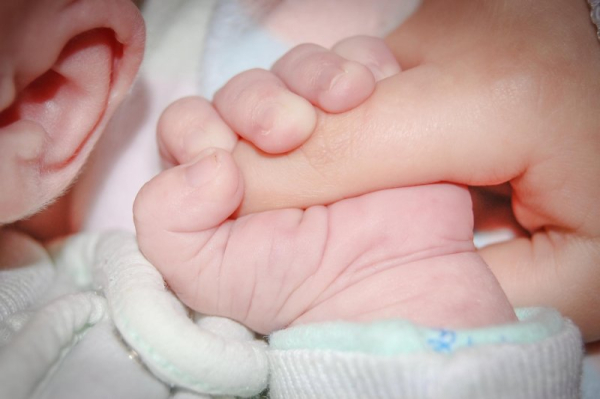
Argentina’s increase in infant mortality “is very concerning because it breaks a long-standing trend,” former Health Minister Adolfo Rubinstein said. Photo by to jarmoluk/Pixabay
Infant mortality in Argentina, a key indicator of health, social and economic conditions, has increased slightly, breaking a two-decade downward trend amid declining birth rates and budget cuts in the health sector.
The infant mortality rate, which measures the number of deaths before age 1, rose to 8.5 per 1,000 live births between 2023 and 2024 from 8 per 1,000 live births between 2022 and 2023, a 6.25% increase.
“The increase, beyond its magnitude, is very concerning because it breaks a long-standing trend,” former Health Minister Adolfo Rubinstein told fact-checking outlet Chequeado. He said the shift is notable given that the rate had been steadily declining in Argentina and across much of the region for decades.
Rubinstein said the figures are largely explained by rising poverty and its impact on health, a trend that began during the COVID-19 pandemic and deepened in recent years under the administrations of former President Alberto Fernández and current President Javier Milei.
Demographer Eleonora Rojas, a researcher at Argentina’s National Scientific and Technical Research Council, known as CONICET, told UPI that infant mortality reflects overall living conditions and access to health care.
“Infant mortality is linked not only to poverty, but also to the availability, access and quality of maternal and child health services,” she said.
Rojas noted that Argentina made significant progress over the past decades. Official data show the rate fell by about 37% between 2005 and 2024, dropping from 13.4 per 1,000 live births.
“However, that improvement was not constant. The increase between 2023 and 2024 illustrates the difficulty of sustaining progress over time,” she said.
The deterioration coincides with a more challenging social environment.
“Poverty in households rose from 31.8% in the second half of 2023 to 42.5% in the first half of 2024, reflecting a decline in overall living conditions, and therefore for children under 1 year old,” Rojas said.
This situation directly affects infants, who depend on family conditions and access to basic services.
Rojas also warned of an increase in infant deaths that could have been prevented with existing medical knowledge.
“These deaths are linked to insufficient prenatal care, complications during childbirth or lack of follow-up in the first months of life, which underscores the importance of continuous care during pregnancy and the first year,” she said.
Vaccination coverage is another key factor. Rojas said immunization rates among children have been declining for a decade, “although they showed a rebound in 2024.”
Even so, she stressed that maintaining high vaccination levels is essential to prevent diseases that can be severe or fatal in early infancy.
Regional disparities remain significant. In 2023, the infant mortality rate in Buenos Aires city was 5.5 per 1,000 live births, compared with 11.6 in Corrientes province. A year later, the gap widened, with the capital dropping to 4.9 and Corrientes rising to 14.
“This growing gap shows that health improvements do not reach all parts of the country equally and depend largely on place of residence,” Rojas said.
She added that the challenge goes beyond reversing the recent increase. The underlying issue is the difficulty of sustaining progress in a decentralized and unequal health system.
“Reducing poverty, creating jobs and expanding access to education are key conditions to improve living standards and consolidate public health gains,” she said.
After the increase in 2024, the outlook for 2025 shows mixed signals. Although UNICEF reported a significant drop in child poverty to about 31.6% in the first half of the year, experts say the national health outlook remains a concern.
