

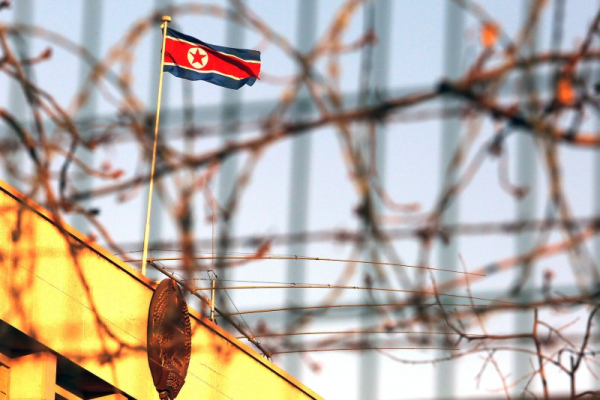
North Korea is punishing citizens caught watching South Korean television with forced labor and even death, according to an Amnesty International report released Wednesday. File Photo by Stephen Shaver/UPI | License Photo
North Korea is carrying out arbitrary and brutally disproportionate punishments, including executions, against citizens caught watching South Korean television and other foreign media, an Amnesty International report released Wednesday says.
Based on interviews with 25 North Korean escapees, the report documents a system in which secret consumption of South Korean dramas and films is widespread but the consequences, ranging from public humiliation and years in labor camps to execution, vary depending on wealth and connections.
“These testimonies show how North Korea is enforcing dystopian laws that mean watching a South Korean TV show can cost you your life — unless you can afford to pay,” Sarah Brooks, deputy regional director of Amnesty International, said. “The authorities criminalize access to information in violation of international law, then allow officials to profit off those fearing punishment.”
The report includes testimony from individuals who fled the isolated state between 2012 and 2020. Choi Suvin, 39, escaped in 2019 and said many North Koreans sell their homes to raise up to $10,000 to bribe officials and avoid harsh punishment.
“People are caught for the same act, but punishment depends entirely on money,” she said.
Another escapee, Kim Joonsik, 28, was caught watching South Korean dramas three times before fleeing but received only warnings because his family had ties to officials. He said three of his sisters’ high school friends were given years-long sentences in labor camps because their families could not afford bribes.
The report also details how public executions and forced attendance at such events have been used as tools of terror. Kim Eunju, 40, recalled being taken with middle school classmates to watch people being executed for watching or distributing South Korean media.
“It’s ideological education: if you watch, this happens to you too,” she said.
Pyongyang ramped up its crackdown on foreign media access as it closed borders and tightened control during the COVID-19 pandemic. A 2020 law banning “anti-reactionary thought” mandates up to 15 years of forced labor for possession of foreign media and the death penalty for large-scale distribution of South Korean dramas, films or music.
Despite the risks, interviewees said many citizens continue to watch smuggled dramas and listen to K-pop on USB drives.
The report echoes longstanding issues chronicled by the United Nations Commission of Inquiry and other human rights organizations. A landmark 2014 COI report documented North Korean crimes against humanity, including torture, rape, execution, deliberate starvation and forced labor, which it said were “without parallel in the contemporary world.”
A follow-up U.N. human rights assessment released in 2025 found that North Korea’s human rights situation “has not improved over the past decade and, in many instances, has degraded,” citing worsening food shortages, widespread forced labor and tight restrictions on movement and expression.
The U.S. State Department’s 2024 Country Report on Human Rights Practices also documented continued brutality, citing executions, physical abuse and arbitrary detention as central tools of state control.
Amnesty’s report calls on the North Korean government to repeal laws criminalizing access to information, abolish the death penalty for such offenses and protect fundamental freedoms.
“This government’s fear of information has effectively placed the entire population in an ideological cage, suffocating their access to the views and thoughts of other human beings,” Brooks said. “People who strive to learn more about the world outside North Korea, or seek simple entertainment from overseas, face the harshest of punishments.”
