


Police in South Africa lauched a major manhunt after an attempt was made to kill a senior officer Sunday night, three days before he was to appear as a witness at a commission investigating corruption at the highest levels in the country. File photo by Justin Lane/EPA-EFE
A major investigation was underway in South Africa into the shooting of a senior police officer over the weekend as a possible attempted political killing because he was due to appear as a witness before a commission on criminality, political interference and corruption in the country’s criminal justice system.
The South African Police Service said in an online post that it would commit maximum resources to the “high level” investigation into Sunday night’s shooting of Maj. Gen. Feroz Khan in Johannesburg, with Acting National Commissioner Lieutenant General Puleng Dimpaneh ordering the involvement of the Political Killings Task Team.
Local media reports said Feroz sustained injuries to his lower body after two 9 mm rounds were fired at him in an ambush in the upscale Johannesburg district of Houghton and that his electronic devices were taken during the attack. He had been in his car, but it was not clear if he was shot in the vehicle, at a traffic light or was forced to stop and was attacked when he exited.
Condemning the attack, Dimpaneh vowed a full investigation, saying “detectives will follow the evidence wherever it leads.”
While calling speculation linking the shooting to Khan’s appearance before the commission or any other motive premature, Dimpaneh said efforts to intimidate, silence or attack any individual involved in judicial processes was taken very seriously and that attempts to interfere with the administration of justice or the work of the commission would be “met with the full might of the law.”
Khan was due to testify Wednesday at the Madlanga Commission launched in September to investigate claims made by the police commissioner of the state of Kwa-Zulu Natal that South Africa’s government had been infiltrated by organized crime, alleging a web of corruption involving politicians, senior police, prosecutors, intelligence operatives and parts of the judiciary.
Police Minister Senzo Mchunu, a senior member of President Cyril Ramaphosa’s African National Congress and a close ally of the president, has been suspended since July after Lt. Gen. Nhlanhla Mkhwanazi alleged Mchunu shuttered the PKTT due to his links to crime bosses.
Mchunu denies all wrongdoing.
Police crime intelligence chief, Lt. Gen. Dumisani Khumalo, testified that a syndicate called the “Big Five” used its political connections to shut down the PKTT because it wrongly believed the elite police task force into political killings was investigating the cartel.
Another witness, testifying under anonymity, told the inquiry that “Big Five” effectively ran the government.
At least one witness has been murdered since the inquiry got underway on Sept. 17.
“As I see it now, this is terrorism,” Mkhwanazi said on the opening day of testimony at the inquiry, saying the individuals involved were “people who want to take over government, not through the ballot paper but through these criminal activities.”
South Africa has seen several high-level corruption scandals in recent years.
Transparency International gave it a score of 41 out out of a maximum of 100 for clean public government in its 2025 report published in February, ranking 81st out of 182 countries.
Former President Jacob Zuma faced a number of corruption allegations, resigning as president and leader of the ruling Africa National Congress in Feb. 2018 to avoid a no-confidence vote.
In 2021, a court postponed a corruption and money laundering trial due to Zuma’s hospitalization. He had just begun a 15-month prison sentence for contempt of court for refusing to appear before a corruption inquiry into alleged scandals when he was president 2009 through 2018.
Now 84, he faces corruption, fraud, racketeering and money laundering charges stemming from a 1999 arms deal when he was serving as deputy president.
In 2016, the country’s top court ordered him to make partial repayment of $15 million public money used for improvements of his private residence.
Historic June moments through the years
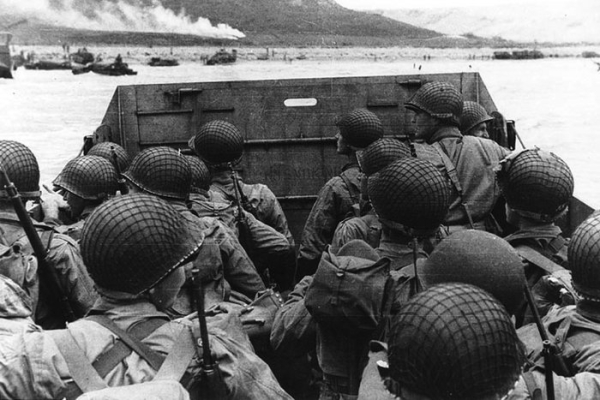
Troops in landing craft approach Omaha Beach on D-Day in Normandy, France, on June 6, 1944. D-Day was the largest seaborne invasion in history and turned the tide of World War II. Photo by UPI | License Photo
