


Spanish Minister of Defense Margarita Robles speaks during a briefing breakfast organized by the New Defense and Space Forum in Madrid, Spain, on February 20. She confirmed Spain’s decision to close its airspace to the U.S. military on Monday. File Photo by J.J. Guillen/EPA
Spain closed its airspace to U.S. military aircraft carrying out attacks on Iran, the defense minister confirmed Monday, further bolstering the country’s opposition to the war.
Defense Minister Margarita Robles told reporters that Spain considers the U.S.-Israeli war on Iran to be “profoundly illegal and profoundly unjust.”
“We don’t authorize either the use of military bases or the use of airspace for actions related to the war in Iran,” she said, as reported by The Guardian. “I think everyone knows Spain’s position. It’s very clear.”
Earlier this month, Spanish Prime Minister Pedro Sanchez called the military offensive against Iran a “disaster.” He said the United States had failed to heed the lessons of history, including the 2003 invasion of Iraq.
In the days after the start of the attacks, which began Feb. 28, U.S. President Donald Trump lashed out at Spain for its refusal to allow the United States to use two bases from which to launch missions against Iran. Trump threatened to sever all trade with Spain over its lack of support.
“Very often great wars start with a chain of events spiraling out of control due to miscalculations, technical failures and unforeseen circumstances,” Sanchez said.
“Therefore, we must learn from history and cannot play Russian roulette with the fate of millions.”
Speaking Monday, Foreign Affairs Minister José Manuel Albares said Spain didn’t want to “do anything that could encourage an escalation in this war.”
In reaction, the White House told the BBC it “does not need help from Spain or anyone else” because it was meeting or surpassing all its goals with the action against Iran.
Iran: Funerals held for those killed in airstrikes
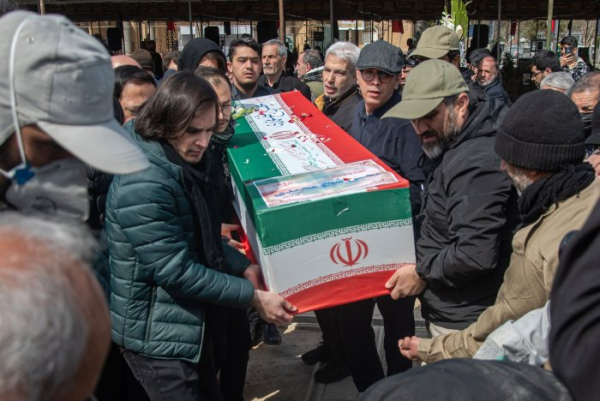
Iranians attend a funeral for a person killed in recent U.S.-Israel airstrikes at Behesht-e Zahra cemetery on the southern outskirts of Tehran in Iran on March 9, 2026. Photo by Hossein Esmaeili/UPI | License Photo
