

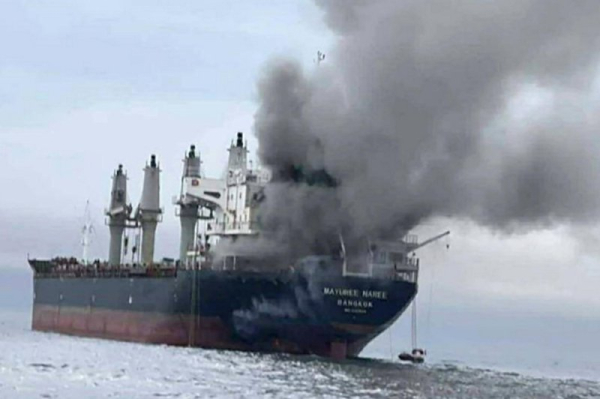
U.S. forces targeted hardened Iranian missile sites on the Iranian side of the Strait of Hormuz with bunker-buster bombs in an effort to prevent attacks on shipping transiting the strategically key waterway. File photo courtesy Royal Thai Navy/EPA
U.S. forces successfully deployed bunker-buster bombs against hardened Iranian missile sites along Iran’s coastline near the strategically key Strait of Hormuz maritime artery, which Iran has effectively closed off.
U.S. Central Command said in a post on X late Tuesday that the 5,000 pound “deep penetrator munitions” were used because the anti-ship missiles at the sites “posed a risk to international shipping in the strait.”
No other details were provided but the weapons are a similar type to those the United States used to target three key Iranian nuclear facilities at Fordow, Natanz and Eshafan in June.
Tuesday’s attacks with the munitions, which are designed to penetrate hardened concrete-protected underground facilities and targets deep beneath the surface or inside mountains, came amid U.S. efforts to get shipping moving through the strait again.
Around 20% of the world’s supplies of oil and gas is exported by Gulf producing countries via the sea lane, only 21 miles wide at its narrowest point, but movement of tankers and cargo vessels has been at a virtual standstill since Israel and the United States attacked Iran on Feb. 28.
The disruption to energy supplies has caused the oil price to surge 60% to above $100 a barrel, sparking concern over the impact on the global economy.
Operations to free up the strait could drag the war out for “weeks if not months,” unnamed officials told The Jerusalem Post.
U.S. President Donald Trump has been attempting to assemble an international coalition under which nations most reliant on oil from the Gulf would send naval vessels to police the strait — an effort that has thus far proved elusive.
Trump has said the United States should not need to contribute on the basis that very little of its oil supply comes via the strait and that it was already providing protection “almost like we do it for habit” as well as for the benefit of “some very good allies that we have in the Middle East.”
The issue is stoking tensions, particularly with NATO and other allies reluctant to commit military assets, whom Trump accused Monday of ingratitude for the decades of U.S. protection they have enjoyed.
“Some are countries that we’ve helped for many, many years. We’ve protected them from horrible outside sources, and they weren’t that enthusiastic. The level of enthusiasm matters to me,” Trump complained after France, Britain, Germany, Italy, Greece, Japan and Australia all refused to join the mission as long as the fighting continues.
Israeli Prime Minister Benjamin Netanyahu, however, pledged Israel would provide assistance during a call Tuesday with Trump.
“There is coordination between our air forces and navies. We will assist both through indirect actions that place immense pressure on the Iranian regime and through direct operations. There are many more surprises ahead,” Netanyahu said afterward.
Iran: Funerals held for those killed in airstrikes
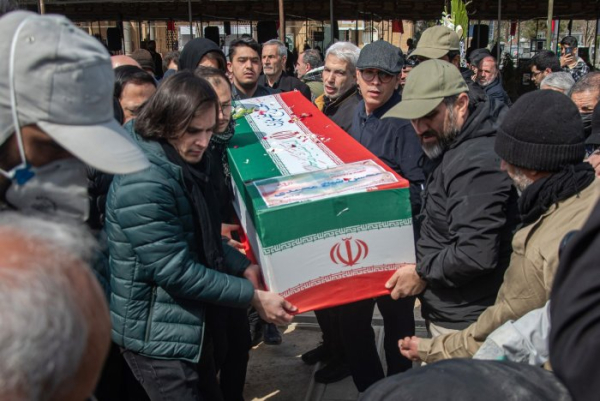
Iranians attend a funeral for a person killed in recent U.S.-Israel airstrikes at Behesht-e Zahra cemetery on the southern outskirts of Tehran in Iran on March 9, 2026. Photo by Hossein Esmaeili/UPI | License Photo
