

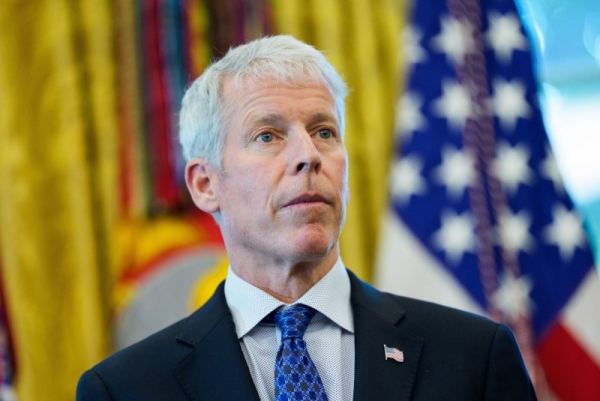
U.S. Energy Secretary Chris Wright will meet in Venezuela with interim President and Hydrocarbons Minister Delcy Rodriguez and executives from oil companies, including Chevron and Spain-based Repsol. File Photo by Aaron Schwartz/UPI | License Photo
The U.S. Treasury Department approved a new framework for Venezuela’s energy sector through three general licenses that allow oil trade, supply of goods and services for the hydrocarbons industry, and operations needed at the country’s ports and airports.
The licenses permit routine transactions required to lift, transport, sell, store, refine or market Venezuelan oil, including activities involving the Venezuelan government, state oil company Petroleos de Venezuela SA, known as PDVSA, or firms in which PDVSA holds at least a 50% stake.
The measure keeps sanctions in place against the Venezuelan government and PDVSA, but eases certain activities. U.S. officials said the goal is to facilitate investment, boost crude and gas production, and support economic stability under U.S. oversight.
The move comes amid changes in U.S.-Venezuela relations following recent political developments, including the capture by the United States of former President Nicolas Maduro and the appointment of Delcy Rodriguez as interim president.
The Treasury Department’s Office of Foreign Assets Control issued General License No. 48 on Tuesday, authorizing previously restricted oil-sector operations. The license allows the provision of goods, technology, software and services required for oil and gas exploration, development and production in Venezuela, including equipment maintenance and operational support.
At the same time, General License 30B authorizes certain transactions needed for the operation and use of Venezuelan ports and airports. General License 46A allows established U.S. companies to participate in the marketing, transport, export, refining and sale of Venezuelan oil, provided activities comply with U.S. law and specific conditions.
The authorization sets clear requirements. Contracts with the Venezuelan government or PDVSA must be governed by U.S. law or a U.S. jurisdiction, and any dispute resolution process must take place in the United States.
Payments to blocked entities, except local taxes, permits or fees, must be deposited in special funds controlled by the U.S. Treasury.
Companies exporting Venezuelan oil to destinations other than the United States must submit periodic reports to U.S. authorities detailing participants, volumes, values, final destinations, transaction dates and payments made to the Venezuelan government.
According to Venezuelan digital outlet Efecto Cocuyo, U.S. Energy Secretary Chris Wright arrived Wednesday at Simon Bolivar International Airport near Caracas.
The visit aims to assess the recovery of Venezuela’s oil industry after years of underinvestment, poor management and sanctions.
The agenda is expected to include meetings with interim President and Hydrocarbons Minister Delcy Rodriguez at Miraflores Palace, the presidential headquarters. Wright also is expected to meet executives from oil companies, including Chevron and Spain-based Repsol, the report said.
During his stay, scheduled through Friday, Wright is expected to tour Petropiar, the largest oil project in Venezuela’s Orinoco Belt jointly operated by Chevron and PDVSA.
