

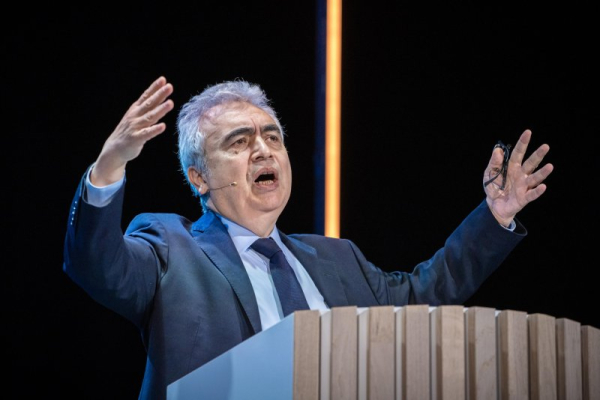
Fatih Birol said Monday at the National Press Club in Canberra, Australia, that energy assets across nine countries have been “severely or very severely” damaged in the Iran war. File Photo by Ole Berg-Rusten/EPA-EFE
More than 40 energy sites in the Middle East have been damaged since the United States and Israel launched a war with Iran, the head of the International Energy Agency said Monday.
Fatih Birol said at the National Press Club in Canberra, Australia, that energy assets across nine countries have been “severely or very severely” damaged. The breadth of the damage and the closure of the Strait of Hormuz has created a historic global energy crisis.
“Not only oil and gas,” Birol said. “Some of the vital arteries of the global economy, such as petrochemicals, such as fertilizers, such as sulfur, such as helium. Their trade is all interrupted, which would have serious consequences for the global economy.”
Birol equated the impact on global energy to the twin oil shocks of the 1973 OPEC embargo and 1979 Iranian Revolution, and Russia’s invasion of Ukraine combined.
As the war continues, Birol said “no country will be immune to the effects of this crisis.”
“The single most important solution to this problem is opening the Hormuz strait,” Birol said.
Earlier this month, IEA’s 32 member countries agreed to release 400 million barrels of oil to ease market stress.
The IEA is discussing another release of emergency oil reserves, Birol said. Leaders in North America, Asia and Europe are being consulted about this. Birol noted that the previous release accounted for about 20% of IEA’s emergency reserves.
“If needed, we can put more oil in the markets, both crude oil and products, if it is needed,” he said. “Our stock release will help to comfort the markets but this is not the solution. It will only have to reduce the pain on the economy.”
Iran: Funerals held for those killed in airstrikes
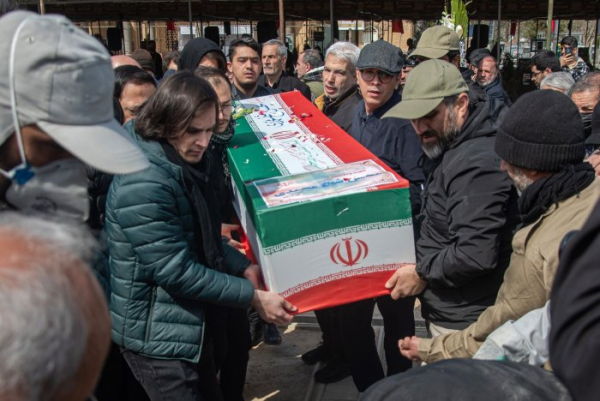
Iranians attend a funeral for a person killed in recent U.S.-Israel airstrikes at Behesht-e Zahra cemetery on the southern outskirts of Tehran in Iran on March 9, 2026. Photo by Hossein Esmaeili/UPI | License Photo
