

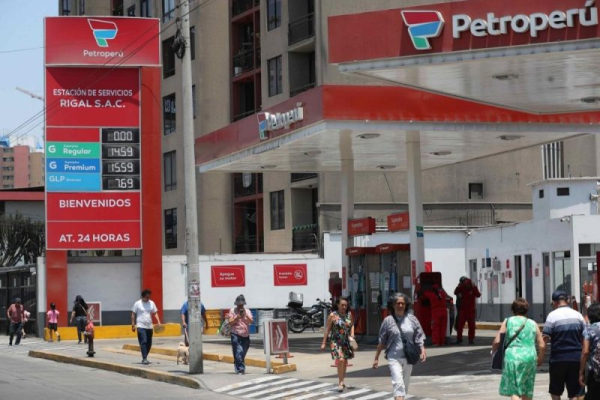
The decision to order remote work and instruction in Lima and another city follows a major failure in the Camisea gas transportation system, the backbone of Peru’s energy supply. File Photo by Paolo Aguilar/EPA
Peru’s government has ordered an immediate return to virtual classes and mandatory remote work in Lima and the neighboring port city of Callao as the country grapples with an energy crisis triggered by damage to a key natural gas pipeline.
The measure follows a major failure in the Camisea gas transportation system, the backbone of Peru’s energy supply. The disruption has forced authorities to ration natural gas and liquefied petroleum gas, or LPG, and adopt emergency steps to reduce electricity demand.
The restrictions took effect immediately and will remain in place through Friday.
Prime Minister Denisse Miralles said schools, technical institutes and universities in the capital region must suspend in-person instruction and activate digital platforms to ensure academic continuity, local outlet RPP Noticias reported.
To ease pressure on transportation and electricity systems, remote work is now mandatory for the public sector and “highly recommended” for private companies in Lima.
Officials aim to reduce use of vehicles powered by compressed natural gas, or CNG, and prevent overloads in an electricity grid operating with sharply higher generation costs.
The crisis began after a massive flare-up Tuesday near mile 28 of the Camisea pipeline in the Megantoni district of the Cusco region. The incident halted hydrocarbon flows to Peru’s coast, cutting off about 70% of the LPG and natural gas normally consumed nationwide.
Peru’s energy and mining investment supervisory agency said the rupture occurred during maintenance work. Due to the difficult terrain in the remote Cusco jungle, repairs could take time. The Energy and Mines Ministry declared a 14-day rationing period for natural gas and LPG.
The disruption has affected industrial production, transportation, power generation and fuel distribution.
While authorities continue to assess the economic impact, analysts warn of mounting risks. Electricity generation costs have risen from about $40 to more than $200 per megawatt-hour, a jump that could translate into higher utility bills and increased production costs.
“The risk that Peru enters a period of stagflation is relatively high, although we do not expect it to be long-lasting,” economist Juan Carlos Odar, director of Phase Consultores, told Infobae.
On the streets of Lima, shortages have become visible. Long lines have formed at gas stations and the price of household gas cylinders has surged. Transportation unions, facing limited access to CNG, have called for a nationwide strike Thursday, which could further disrupt activity in the capital.
As technical crews work to repair the damaged pipeline in Cusco, the government is seeking alternative fuel imports to prevent widespread blackouts.
Authorities have temporarily eased rules on fuel transportation, storage and imports, newspaper La República reported.
One of the key measures allows tanker trucks with foreign license plates to enter Peru and transport hydrocarbon-based fuels or LPG without being registered in the country’s Hydrocarbons Registry.
