

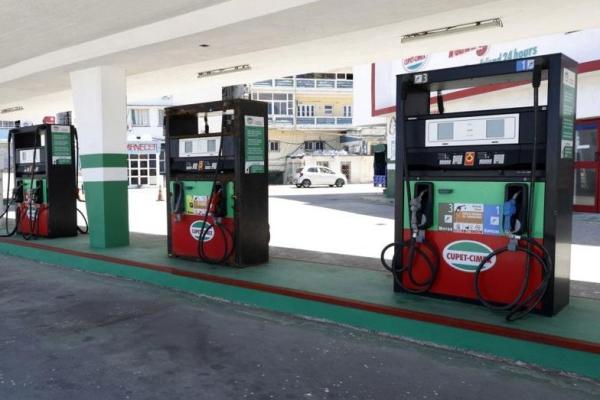
A gas station in Havana, Cuba, has no fuel, as Cuba has been without oil deliveries for three months because of the U..S. embargo. The arrival of a Russian tanker Monday is expected to provide some relief, but it will take some time for the fuel to reach those who need it. Photo by Ernesto Mastrascusa/EPA
A Russian oil tanker carrying humanitarian fuel has arrived at the Cuban port of Matanzas, according to Russia’s Ministry of Transport, as this island nation faces a prolonged energy crisis.
The tanker, the Anatoli Kolodkin, is transporting about 100,000 tons of oil and is awaiting unloading, Russian authorities said Monday. The vessel sails under the Russian flag.
Russian state outlet RT reported the tanker was escorted by a Russian Navy warship through the English Channel before continuing alone into the Atlantic Ocean.
Kremlin spokesman Dmitry Peskov said Moscow considers it its duty to provide assistance to Cuba, where fuel shortages have disrupted essential services.
“Russia believes it is its responsibility to be actively involved and provide the necessary assistance to the Cuban people, who need fuel to operate the country’s life-support systems,” Peskov said, according to RT.
Estimates cited by CNN en Español suggest the shipment could cover several weeks of fuel demand on the island, which is experiencing a severe energy crisis after the United Stated imposed tougher restrictions in January.
U.S. President Donald Trump said he does not oppose other countries, including Russia, supplying oil to Cuba.
“We don’t mind letting someone receive a shipment because they need it. They have to survive,” Trump told reporters aboard Air Force One. “If a country wants to send oil to Cuba right now, I have no problem, whether it’s Russia or not.”
He added: “I would prefer to let it come in, whether from Russia or any other country, because people need heating, refrigeration and all the other things.”
It remains unclear why Washington allowed the tanker to proceed despite longstanding U.S. sanctions on Cuba. The New York Times reported that any attempt to intercept the vessel at sea could have escalated tensions with Russia.
The arrival marks the first oil tanker to reach Cuba in three months, according to Cuban President Miguel Díaz-Canel, who previously warned of worsening energy shortages. The disruption has strained electricity generation and affected daily life across the island.
The situation follows U.S. pressure on Venezuela and Mexico to reduce or halt energy shipments to Cuba, further tightening supply.
Russian Foreign Minister Sergey Lavrov said last week Moscow is concerned about rising tensions around Cuba and reaffirmed support for the Cuban government, according to TeleSURtv.
“We are in constant dialogue with the Cuban leadership and, of course, we are discussing how to help the island in such a difficult situation,” Peskov said.
“Cuba is under conditions of a very severe blockade and needs petroleum products and crude oil to maintain essential systems,” he said.
As the Anatoli Kolodkin awaits unloading in Matanzas, the shipment is expected to provide short-term relief once it is refined. However, its broader impact will depend on how quickly the fuel can be processed and distributed within a system under sustained strain since January.
