

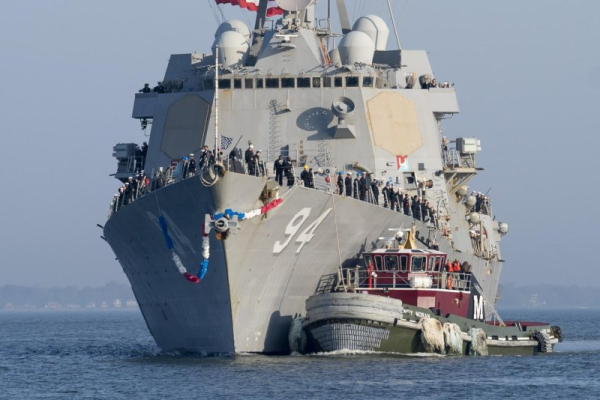
The U.S. Navy destroyer USS Nitze has been detected near the Bahamas and is moving toward the central Caribbean at about 10 knots along a trajectory similar to that of the Russian tanker, according to naval tracking data. Photo by U.S. Navy
The Russian-flagged tanker Anatoly Kolodkin, which was expected to deliver 730,000 barrels of crude oil to Cuba, has altered its course in the Caribbean and no longer is heading directly toward the port of Matanzas, according to maritime tracking data and media reports.
Data from platforms such as VesselFinder and MarineTraffic show the vessel continuing at a speed of about 10 to 11 knots, but now moving toward the central Caribbean rather than its previously projected route to the island.
The tanker’s arrival had been seen in recent days as a potential source of immediate relief for Cuba, which is facing a deepening energy crisis.
The Anatoly Kolodkin is under sanctions by the United States, the European Union and the United Kingdom due to its role in transporting Russian oil.
Also, Bloomberg News reported that the Treasury Department “added Cuba to a list of countries restricted from taking delivery of Russian oil” after the tanker appeared headed there.
U.S. authorities have been closely monitoring its movements, and reports indicate the presence of U.S. Coast Guard vessels in the region as part of efforts to limit fuel shipments to Cuba.
ACTUALIZACIÓN! El tanquero ruso ⚓️ ANATOLY KOLODKIN (IMO: 9610808) https://t.co/6r3rZd5nnC Mantiene curso a 11 nudos hacia el Caribe, aunque su vector ha cambiado hacia el Caribe Central, dejando de apuntar directamente a #Cuba.
A su vez, el buque de la @USNavy ⚓️ USS… pic.twitter.com/oqmsajmk3A— Falcon (@FlconEYES) March 23, 2026
The U.S. Navy destroyer USS Nitze has been detected near the Bahamas and is moving toward the central Caribbean at about 10 knots along a trajectory similar to that of the tanker, according to naval tracking data.
The diversion follows a similar development involving another vessel. The Hong Kong-flagged Sea Horse, which was carrying fuel bound for Cuba, changed course away from Cuba and is now approaching Venezuela, according to recent maritime tracking data.
After weeks drifting mid-Atlantic, SEA HORSE (IMO: 9262584) is now approaching Puerto Cabello.
Low speed, course adjustments, final approach.
A cargo that couldn’t reach Cuba appears to have found an alternative discharge point.
Typical sanctioned trade… pic.twitter.com/fLcSjzhdND— Russian Forces Spotter (@TiaFarris10) March 24, 2026
The vessel, identified by IMO number 9262584, transports an estimated 200,000 barrels of fuel. Its movements raised concerns from the outset due to erratic course changes and possible manipulation of tracking signals, practices associated with Russia’s so-called shadow fleet.
According to Politico, some analysts view these movements as a geopolitical signal rather than a sustained effort to supply Cuba.
“Russia loves to poke us in the eye,” said Lawrence Gumbiner, who led the U.S. Embassy in Havana during President Donald Trump’s first term, adding that Moscow is not “serious about coming to Cuba’s rescue.”
Other former officials say such operations may aim to generate outsized strategic effects. “At the cost of one oil tanker, they can try and create a disproportionate impact on our focus and resources,” said Alex Gray, former chief of staff of the U.S. National Security Council.
Cuba has not received stable fuel shipments since early January, following disruptions in deliveries from Venezuela and the suspension of supplies from Mexico, worsening blackouts and shortages across the island.
