


TikTok said Friday it would bring on-stream new technology for verifying the ages of teen users as part of its commitment to protect young users. File photo by John Angelillo/UPI | License Photo
TikTok said Friday that it would begin rolling out enhanced age-verification technology to ensure users in the European Union meet the platform’s minimum-age rules precluding children under 13 from using the app.
The rollout over the coming weeks follows a year-long pilot of the system, which automatically flags up accounts that may belong to someone under 13 to a human moderator to make a final determination, resulting in the removal of thousands of underage accounts, TikTok said in a blogpost.
The technology uses information the account holder provides, including their profile, the types of videos they upload and their actions while using the app to “predict” whether they are likely to be underage.
The process includes an appeal process in which users are able to prove their age with a government-approved ID, facial age estimation technology or an authorization on a credit card in their name.
TikTok said the new guardrails were in addition to existing “multi-layered” checks to keep children off the platform by detecting and verifying when users have not entered their real date of birth.
It stressed that the new system was in line with EU data and privacy laws by protecting information gathered in predicting someone underage from being used for any other purpose than determining whether to refer an account to the moderation team.
“By adopting this approach, we are able to deliver safety for teens in a privacy-preserving manner. We take our responsibility to protect our community, and teens in particular, incredibly seriously,” said the company.
TikTok emphasized its commitment to ensuring an “age-appropriate experience” for all teens, even after they’ve passed age checks, using automatically-applied settings to protect them from inappropriate content and contact.
Content flagged up as unsuitable for teens was “filtered from their experience,” said TikTok, noting that teen accounts automatically had more than 50 preset safety, privacy, and security features and settings
For older children, TikTok said it blocked under-16s from direct messaging.
A 60-minute screen-time limit is enforced for under-18s who are also unable to receive notifications “after bed time.”
“To help ensure that teens are in the right experience for their age, we also use technologies that help predict whether a person falls within a certain age range (e.g., 13-15). If the estimate doesn’t match the date of birth provided at sign-up, a moderator can review the account and place it into the correct age experience,” the firm added.
TikTok’s announcement came as EU regulators are reviewing how tech firms’ age-verification checks fit with data protection laws amid a wider debate, internationally about teen social media use in the wake of under-16 ban in Australia.
In Britain, Prime Minister Keir Starmer told members of his Labour Party on Monday he would consider a similar ban as he was becoming increasingly worried about excessive smartphone use by children and teens.
“We are looking at Australia, there are different ways you can enforce it,” he told the MPs, adding that he agreed phones should not be allowed in schools.
He had previously opposed restricting children’s social media access, on grounds it would be too difficult to police and might force them onto the underground web, but reversed his stance after the opposition Conservative Party said it would impose an under-16 ban if it won the next election.
The week in photos: Protestors, NFL, premieres
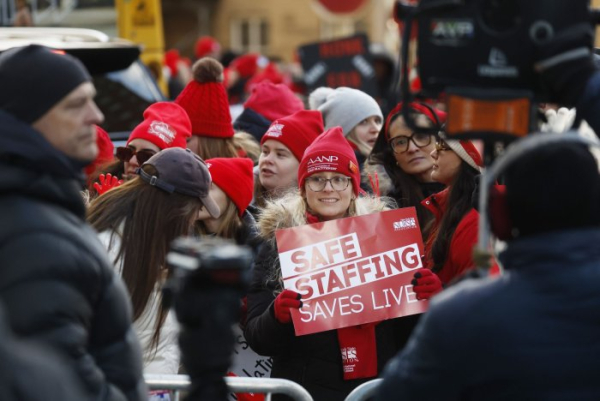
Picketers hold signs outside at the entrance to Mount Sinai Hospital on Monday in New York City. Nearly 15,000 nurses across New York City are now on strike after no agreement was reached ahead of the deadline for contract negotiations. It is the largest nurses’ strike in NYC’s history. The hospital locations impacted by the strike include Mount Sinai Hospital, Mount Sinai Morningside, Mount Sinai West, Montefiore Hospital and New York Presbyterian Hospital. Photo by John Angelillo/UPI | License Photo
